

NEED2KNOW
This feed is wired to your headless WordPress stack with a GraphQL-first pipeline and REST fallback resilience. Same GRYHAT visual language, now connected to your backend publishing pipeline.
Feed Snapshot
Entry Detail
General Intel
The Elephant in the Room, Vol. 2: Why “Free” Doesn’t Mean Safe
8/28/2026, 6:13:17 PM • AndyTheAiGuy
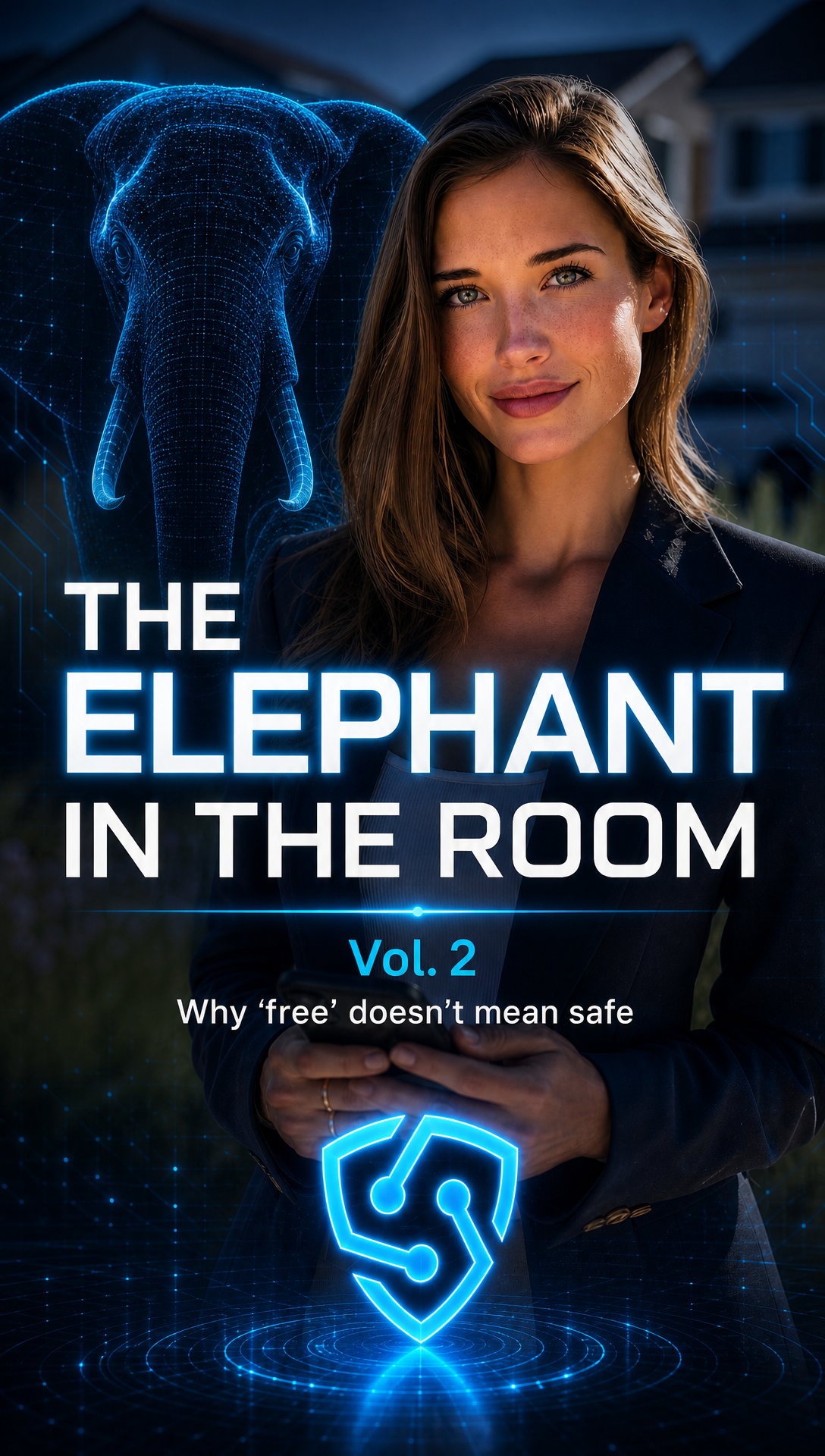
Last time it was your .env file, sitting exposed in a public directory for any bot to find. This time it’s your entire product.
“Vibe coding” was supposed to be about anyone building the thing they always wanted — no engineering degree required. Increasingly, though, a chunk of the genre’s most-watched content isn’t teaching people to build their own thing. It’s teaching them to rebuild someone else’s thing, feature-for-feature, and hand it out for free.
That’s not a hypothetical. It’s a tutorial format now, with a title template you can already predict: “I Cloned [Successful App] in [Absurdly Short Timeframe].”
The template, in one example
Take I Made a $1 Billion App in 34 Minutes (How You Can Too), from creator Riley Brown. He opens by naming his target directly: Krea, a paid AI image tool. He screen-shares Krea’s actual interface and walks through its specific, named features — the prompt box, the aspect-ratio picker, its signature “Elements” reference system — not as inspiration, but as a literal spec sheet. His own words for what comes next: “that is what we’re going to be cloning.”
His AI coding agent rebuilds it in real time, replicating Krea’s core UX one-to-one. By the end, he’s polished the clone’s colors, buttons, and logo, added a feature that pulls a thumbnail from another creator’s YouTube channel without permission as a demo, and then makes the whole thing “completely free for you to clone” — publishing it with a built-in “remix” feature so other viewers can copy it too.
His framing is unambiguous. He doesn’t call it “inspired by” or a learning exercise. He calls it a clone, repeatedly, and pitches the underlying motive as explicitly commercial: Krea is expensive, so why not rebuild an equivalent and pocket the difference — or, in his words, take it further and turn it into a $100K/month SaaS.
This isn’t one video. It’s a business model.
Search his own channel and the pattern is right there in his own titles: “I Cloned a $1.275 Billion App In 30 Minutes.” “Can I Vibecode a $250M App Better Than a Pro Developer?” “We Built an $80M App in 47 Minutes.” “We Vibe Coded a $4.8m App in 32 Minutes.” One title stands out — “We Made Claude Code Build Lovable in 75 Minutes” — an AI coding tool used to clone a competing AI coding tool. You can run that same search yourself.
Why “it’s free” doesn’t get creators off the hook
There’s a legal instinct people reach for here: if I’m not charging for it, it’s not really stealing. It’s wrong, and worth correcting directly, because it’s the exact permission structure these videos are handing their audiences.
U.S. copyright law doesn’t carve out a “personal or non-commercial use is automatically fine” exemption. The relevant defense is fair use — a fact-specific four-factor test that weighs purpose, the nature of the original work, how much was used, and the effect on the original’s market. Publishing a free clone publicly and inviting others to copy it cuts against fair use, not for it, because it substitutes for the original in the market — arguably a more direct market harm than if he’d sold it.
Patent law is even less forgiving of the “just for personal use” theory: infringement under U.S. law doesn’t require a profit motive at all, only unauthorized making or using of a patented invention. The narrow “experimental use” defense courts have recognized is close to a dead letter — even university research has failed to qualify.
Most of what’s happening in these clone videos isn’t patent territory anyway — it’s copyright (copied code, design, layout), trademark/trade dress (replicated look-and-feel), and straightforward terms-of-service violations (like lifting another creator’s thumbnail without asking). But the legal reality across all of them is the same: distributing the copy, not profiting from it, is usually what triggers liability. “I gave it away for free” is not the defense creators seem to think it is.
What to do on either side of this
If you’re building: build from your own spec, not someone else’s live product. A generic UX pattern — a login form, a settings page — is fair game. A named competitor’s signature workflow isn’t a template. It’s their IP.
If you’re the one getting cloned: document your build dates now, and if you’ve got something patent- or copyright-worthy, get it filed before it becomes someone’s 34-minute tutorial.
Vibe coding didn’t invent this problem. It just made copying fast enough that nobody stops to ask if they should.
— GRYHAT. We build it right the first time.
Publishing Locked Down
Need2Know publishing is backend-only. No post creation controls are exposed in the public frontend. Your bots can continue posting through authenticated server-to-server workflows.